• Home
  • About
  • Blog
  • Events
  • Media
  • Audio
  • Video
  • Glossary
  • Contact
  • Download
  • RSS

Could Edge-Caching Violate Net Neutrality?

December 18th, 2008  |  by bballou  |  Published in Future of the Internet  |  1 Comment

Note: Brendan Ballou is solely responsible for the content of this article. It is not necessarily endorsed by Professor Zittrain

Our little corner of the blogosphere has been lit on fire by the recent article in the Wall Street Journal claiming that Google was coming out against Net Neutrality. Now, there are plenty of problems with this article. Contra WSJ, to quote David Isenberg:

“Google’s edge caching isn’t new or evil
Lessig didn’t shift gears on NN
Microsoft and Yahoo have been off the NN bandwagon since 2006
The Obama team still supports NN
Amazon’s Kindle support is consistent with its NN support”

This is all more or less true (I think Lessig would himself agree that his opinions about net neutrality have evolved). However, none of this says that Google isn’t violating the principle of net neutrality. Let’s use Google’s own summary of the idea, that broadband providers “should not be allowed to prioritize traffic based on the source, ownership or destination of the content.” Strictly speaking, this does seem to conflict with Google’s OpenEdge program. The program aims to cache Google’s search and video content on servers within network operators’ facilities. Such deals would save bandwidth for the network operators and increase access speeds for broadband customers. Such deals would also give Google a distinct advantage over its search and video competitors. Says one of the commenters on David Isenberg’s above-referenced blog:

“The plan is for Google to install equipment that will bypass the public Internet and ensure that their content, e.g. YouTube, will be delivered to ISP customers faster and more reliably than competing services such as Netflix Instant Watch that depend on the public Internet for delivery. If there weren’t a performance advantage, there would be no reason to do this.

“Whether this violates [network neutrality] depends on whose definition you take, and from what era. Current Lessig says it’s fine as long as any (rich) company has access to the [cable operator], but historical Lessig said such arrangements (”access tiering”) are not fine because only a few large players can enjoy their benefits.”

Now, this might not be bad. It might not hurt innovation. It might not be evil. But it certainly violates net neutrality, if we define the principle strictly as bit-by-bit non-discrimination. That said, such a violation might not be such a big deal. Instead of asking whether this deal prioritizes certain services or content over other services or content, let’s ask whether this deal promotes users’ autonomy and generative capacity. Long-term, those seem to be the questions that matter.

Finally, at the risk of burying the lede, let me add that before publishing this post I asked JZ’s thoughts on the matter. Here’s what he wrote:

“I don’t see this as a gotcha moment, but it’s a useful pointer to a larger debate about the role of intermediaries like Akamai, which make high-bandwidth streaming work better for its customers thanks to similar arrangements.  Akamai and deals like the ones Google seek might be helpful to the Net because they ease the pressure for more formal, network-embedded discrimination, since big content providers can have their needs met with what amounts to an endpoint kludge.  And so long as the network itself isn’t discriminating, P2P provides a neat form of easy high-bandwidth distribution within the reach of any content provider — so long as the material in question is popular enough for enough P2P users to seed it.  But at its extreme, if one imagines a public Net with no further buildout and a migration of most content to edge staging points by those who can afford it, the rise of bandwidth arbitragers isn’t good.  I’m not currently that worried about this scenario because the bottlenecks in bandwidth turn out to be towards the edges rather than in the middle of the network.”

Creative Commons- the Past and the Future

December 15th, 2008  |  by dyw  |  Published in Future of the Internet  |  Click to comment

By Yvette Wohn

Creative Commons held a special panel and fundraiser on Friday featuring Board Chairman James Boyle, Stanford professor and CC founder Larry Lessig, CEO Joichi Ito, and former Executive Director Molly S. Van Houweling. The event kicked off with HLS Dean Elena Kagan announcing Lessig’s return to Harvard (in fall 2009) and an introduction by Charlie Nesson. Jonathan Zittrain- moderating the session- then zoomed in with his first question: where did Creative Commons start?

Everyone seemed to agree that CC was a collaboration of bits of ideas from several people, and that the concept evolved over many meetings. Zittrain insisted that it was Lessig’s obsession with the letters CC, which began as “counter copyright” in the Eldred v. Ashcroft case. Lessig said that for him, the real start of CC was after he lost the Eldred case, which he thought (if won) would create a nationwide movement to change copyright. “We thought we were going to unleash rationality from top down through the Supreme Court but found out that we had to unleash rationality from the bottom up,” he said.

The panelists reflected on milestone moments of the organization. For Van Houweling, it was when Justice Breyer referred to Creative Commons without footnoting it in his dissent for MGM Studios v. Grokster — assuming everyone would know what it was. For Lessig, it was when Hewlett Foundation walked up to them after losing the Eldred case with a million dollars. Boyle said it was when someone in his class looked at a Coco Chanel bag and said, “Oh, Creative Commons.”

Discussing the development of CC, the panelists emphasized that breaking down barriers was an important movement for CC and people who “prevent failed sharing.”

As it turns out, the enemy is near. Lawyers are the enemy of sharing, Lessig said, criticizing that law professors teach their students to give clients absolute power. “Lawyers’ mentality is to build systems which exert as much control as possible– never thinking about the consequences of that way of deploying culture, knowledge, or science,” he said, pointing out that the situation was similar to that of global warming in that in early stages, people deployed technologies without thinking of how it would affect the environment. Part of the objective of CC is to wake up lawyers to the responsibility they have in deploying inobstructive legal tools, he said.

Ito agreed with Lessig, saying that the unintentional bits of legal code that prevent sharing are results of people don’t understanding interoperability. Even if you wanted to created an open license, different licensing systems would clash with one another, he said.

Boyle also brought up the problem of limited open systems that can build self-reinforcing incentive structures. “We know from things like open source software that if you have a community, you can have structures that incentivize this and start to build norms of communities and cultures of sharing that work, and work economically.” Understanding the net and the role that the net has to enable those cultures of sharing is a central influence in thinking of CC, he added.

One of the big futures of CC is the growing international movement. “While we were barely hanging on with our fingernails to launch CC to the US, which has its own set of complicated copyright issues, Larry said that it needs to be global.” Boyle said. “I told him it was impossible, but soon professionals, artists, lawyers, professors from all over the world were coming to us.”

The panelists also hope that CC will provide the necessary framework for people to make their own decisions about sharing. CC doesn’t have the authority to define freedom and speak on behalf of the creators but it encourages people to become involved and argue about what they think freedom should be, Lessig said. He noted that over time, people were seen moving away from the most restrictive licenses, and that CC provides the infrastructure to encourage arguments on what is the appropriate architecture for freedom.

The audience also had various comments and questions for CC– like if there were any lawsuits involving a CC license (there have been: see here and here), or how CC intended to educate people who don’t know a thing about CC or copyright (Ito suggested that future web standards could automatically include licensing data, making it easier to implement).

As a parting message, the panelists strongly solicited donations, saying that the number of individual donors is increasing but corporate sponsors are bailing. Lessig emphasized that money is important; and that ideas can’t be realized without being backed up with resources.

*Watch the forum on Berkman’s YouTube channel

Required reading: big news

December 12th, 2008  |  by jz  |  Published in news  |  18 Comments

Larry’s site has been pwned for the moment, so here’s a copy of his blog post announcing his move:

bn.JPG

It is with a complicated mix of excitement and sadness that I make the following announcement.

As some of you remember, just over a year ago I reported that I was shifting my academic (and activist) work from free culture related issues to (what I called) “corruption.” At Stanford, a year ago, I outlined what this work would be: To focus on the many institutions in public life that depend upon trust to succeed, but which are jeopardizing that trust through an improper dependence on money. Read the New York Times Editorial of last week. Or think of medical researchers receiving money from drug companies whose drugs they review; legal academics receiving money to provide public policy advice from the very institutions affected by that advice; or Congress filled with Members focused obsessively on how to raise money to secure their (or their party’s) tenure. In all these cases, dependency on money in these ways tends to weaken public trust. Or so was my hypothesis when I launched on this project.

But how I would pursue this work has been a constant challenge. I started immediately to devour the books recommended to me by colleagues and on my wiki. I attended conferences and gave talks about the subject. I began a series of interviews with insiders. And with the help of Joe Trippi, I launched Change Congress, which was designed to focus these issues in the context of American politics.

Throughout this process, however, I have felt that the work would require something more. That the project I had described was bigger than a project that I, one academic, could pursue effectively. This wasn’t an issue that would be fixed with a book. Or even with five books. It is instead a problem that required a new focus by many people, across disciplines, learning or relearning something important about how trust was built.

About six months ago, I was asked to consider locating this research at a very well established ethics center at Harvard University. Launched more than two decades ago, the Safra Center was first committed to building a program on ethics that would inspire similar programs at universities across the country. But the suggestion was made that after more than two decades of enormous success, it may make sense for the Center to consider focusing at least part of its work on a single problem. No one was certain this made sense, but I was asked to sketch a proposal that wouldn’t necessarily displace the current work of the Center, but which would become a primary focus of the Center, and complement its mission.

I did that, mapping a five year project that would draw together scholars from a wide range of disciplines to focus on this increasingly important problem of improper dependence. Harvard liked the proposal. In November, the Provost of Harvard University invited me to become the director of the Safra Center. Last week, I accepted the offer. In the summer, I will begin an appointment at the Harvard Law School, while directing the Safra Center.

This was a very difficult decision to make. Stanford is an extraordinary law school, and I have loved my time here. The students are brilliant, yet balanced. The faculty is brilliant, yet surprisingly humble. The Dean has an amazing vision of the future of legal education, and is redefining the law school in ways that I completely support. I am endlessly proud of the Center for Internet and Society and the Fair Use Project. I have the very best assistant in the world (and she promised at least 5 more years if I stayed). I have written four of my five books while here. I’m almost finished with my 6th, the book I am sure I will be most proud of. This is a place that has given an enormous amount to me, and from which I have benefited greatly.

On a personal level, too, this was a difficult decision. California has become our home. My wife is strongly attached to everything Californian; we both have very close friends here; I hadn’t ever imagined raising my kids in anything but the social and political environment of San Francisco. I still find it hard to imagine that I won’t, if not now, sometime. And the enormous beauty of the environment here still takes my breath away. A year into my time at Stanford, I was certain I would never leave. After a blissful weekend with my family last week, it still hasn’t registered that I will be leaving.

But in the end, it was impossible for me to be committed to the project while turning down this opportunity. It is not just the institution, nor the (partial) freedom from teaching. It is the chance to frame a large-scale project devoted to a large, important and complex problem. Once we saw it like this, my wife and I decided that returning to this old home was the right thing to do. And so in June, we will pack up the car for a cross country trek, back to Harvard.

Of course, I have no objective cause to complain. Harvard too is an extraordinary law school. As anyone who knows me knows, some of my closest friends in the world are at Harvard, including the Dean (or at least until Obama steals them all away). Harvard has grown and changed in wonderful ways over the past eight years. It will be an enormously exciting place to teach and learn.

But I regret deeply doing anything that is hurtful to those I respect and like. Worse, I hate doing anything that can be misunderstood. When Dean Sullivan recruited me, she said Stanford was paradise. I thought that was just a slogan. It isn’t. I consider the 8 years I have had here to be the most important and invigorating in my career. And I will miss everything about this place.

Some things won’t change. I will continue to work with Joe Trippi to build Change Congress. And I will continue to explore how best to incorporate this space (the Net) into this research. But I will do all of this, and my work, in the context of Harvard’s Safra Center and its Law School, and of old friendships, revived.

bn2.JPG

Welcome back, Larry!

December 12th, 2008  |  by jz  |  Published in Future of the Internet  |  Click to comment

Larry Lessig to head east.

Q&A with Zittrain on MySpace Suicide Case

December 9th, 2008  |  by dyw  |  Published in Future of the Internet  |  1 Comment

By Yvette Wohn

Megan Meier (13) met Josh Evans (16) on MySpace, the online equivalent of malls for teenagers in the 21st century. After months of flirting, Josh “broke up” his relationship with Megan. “This world would be better without you,” he wrote. Megan fled upstairs to her room in tears; her mother later found her hanging by a belt. It was Oct. 16, 2006.

It would have been a very sad story of a girl who already had a history of depression and peer troubles. But there was an ugly twist. Josh wasn’t really a teenager– he was a fake profile created by Lori Drew, a 49-year old woman . The account was used by Drew, her daughter Sarah, and another family friend to find out if Megan was saying bad things about Sarah behind her back.

Megan’s parents learned about this hoax account about six weeks after Megan’s death, through a parent whose daughter had access to Josh’s profile. They took the case to the Missouri court and lost. Prosecutors in St. Charles County, Mo., declined to prosecute Drew or the teens involved, saying there wasn’t enough evidence to apply criminal standards for the state’s statutes on harassment, stalking or endangering the welfare of a child.

Prosecutors, however, took the case to Los Angeles, which is where MySpace servers are based. Recently, the grand jury indicted Drew with three misdemeanor violations of the Computer Fraud and Abuse Act (CFAA), which is normally associated with hacking. She was charged for accessing protected computers without authorization– in other words, she had violated MySpace’s terms of service, which prohibits the use of fake identities and harassment of other MySpace members. That could mean three years in prison or fines of up to $300,000. (The jurors couldn’t agree on the charge that Drew conspired to violate Section 1030, a felony that carries a prison term of up to 20 years.) Drew has filed for an appeal.

Because Drew was convicted of an act unrelated to cyberbullying (or even identity theft– although she used a picture of an anonymous boy), many scholars (here, here, and here) think this case sets a dangerous precedent. The Electronic Frontier Foundation, Center for Democracy and Technology and Public Citizen, and a group of scholars filed an amicus brief calling the case a threat to online free speech and the Heritage Foundation called the case a “case study in overcriminalization.”

While the Drew case has been drawing attention because of its legal twists, larger issues regarding malicious acts online still remain unsolved. With more and more people connecting to the Internet at faster speeds, are current laws enough to maintain a civil online environment? I asked Jonathan Zittrain a few questions about his take on the case and thoughts on regulations in cyberspace.

Q. Do you think the Lori Drew case sets an uneasy precedent?

Yes.  The facts are awful, and there might be a civil claim in there– Megan’s parents can sue Lori Drew for money.  But it’s not easy to figure out what criminal statute to draft to cover these facts without criminalizing a bunch of other stuff that’s more innocuous, and in any case no one has gone to that trouble– the hacking statute is a terrible fit for this.

Q. We are seeing an increase in slander cases on the Internet, but U.S. law clearly exempts web service providers from taking any responsibility for malicious content. How do you feel about this?

I’m not sure I’d describe this as “malicious content.”  It’s true that Federal law tends to relieve ISPs and online service providers like Myspace from having to monitor what others post through their services.  This is even further out: it’s activity that Myspace would have next to no chance of ferreting out beforehand, and as it stands, the scam was ultimately discovered.

Q. I know you’re a great fan of Wikipedia. Do you think “Wikipedic” self-cleansing measures can be used to clean up content on the web?

I think we can make great strides on technologies to facilitate social signaling, allowing people to express their preferences with respect to information that bears on them.  For example, Google News has started an experiment in this area that lets people who are quoted or mentioned in an article have a privileged place in posting a comment next to it when it appears as a Google News result.  Such signaling won’t help every problem– certainly I don’t think there’s much that could have helped in the Lori Drew situation– but we can’t try to preempt every possible problem with the law.  That’s why we have a tort system, to arrange for compensation later, and I suspect that Lori Drew very much regrets what she did– if only because of the enormous amount of disapprobation she’s experienced since the case went hyper-public.

Security and the Future of the Internet

December 9th, 2008  |  by dyw  |  Published in Future of the Internet  |  Click to comment

[by Yvette Wohn]

Rising security problems are painting a very dark picture for the future of the Internet. The New York Times recently published an article noting the rise of malicious software. This software, known as malware, is installed in one’s computer– in many cases, without the user’s knowledge. It then uses that computer and the Internet to link to and infect other computers. Many of the programs are aimed at extracting personal financial information.

Researchers note that malware is increasingly becoming difficult to detect and delete, and that the software developers on the “bad side” are way ahead of those on the “good” (developers of anti-viruses or anti-spyware). In the past, Windows PCs were the sole target of malware, but with Apple’s increasing market share, Macs are also being infected, although Steve Jobs seems reluctant to say so.

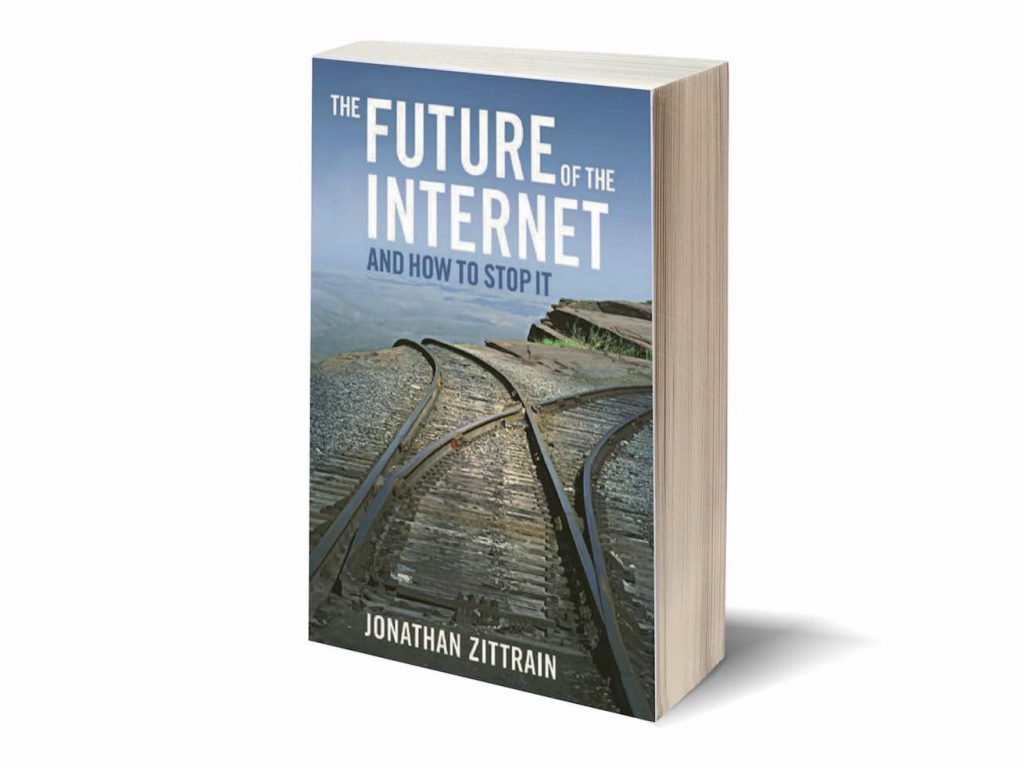
Jonathan talks about these problems in the “Cybersecurity and the Generative Dilemma” chapter of his book, where he gives examples and prospective scenarios of bad codes and expresses concern on how increasing pressure from problems caused by plagued computers could push consumers to desire a PC that is more like an appliance.

It is the basic infrastructure of the Internet and its openness that allows malware to thrive. Certainly, as pointed out in Chapter 2, the optimistic Internet founders were not thinking of blocking malware when they drew up the Internet’s design. More widespread use of the Internet, however, has weakened the mutual trust that was present in the early days of its conception and questions are being raised on all kinds of security– individual, financial, and even national.

But if such an insecure Internet is what lies in the future, how do we stop it? The most important part of this question is “we”– who is the “we” that will take responsibility?

For some, “we” means the government. In that arena, we are seeing that Jonathan’s predictions are coming true at an alarming pace. The Center for Strategic and International Studies (CSIS) commission released a report yesterday on cybersecurity for the Obama administration. The report suggests that a new presidential office be created– the “National Office for Cyberspace”– and that the president should establish a “Cybersecurity Directorate” in the National Security Council. Other proposals include better methods of authentication of digital identities and updating laws that were “written for the technologies of a less-connected era.”

How Obama will respond to this proposal is yet to be seen, especially since the Obama campaign’s technology stance was to “protect openness of the Internet.” [It would certainly not be the first time a government was actively involved in controlling the Internet. Government control even happens in democratic countries on the higher rungs of the global economy ladder-- take, for example, recent censorship problems in Australia and the United Kingdom; or efforts of politicians in Korea to get rid of anonymity in order to illegalize online slander.]

Although I agree that cyberspace needs some sort of order, I don’t think the government or certain organizations should be wholly responsible. We need more collaborative efforts, such as Stop Badware, which is a partnership among academic institutions, technology industry leaders, and volunteers.

Individual users should also take a stronger initiative in protecting their own security. Malware, for example, is like the flu– highly contagious, sometimes lethal, and does not discriminate to race, age or gender. Sometimes catching it is unavoidable, but you can take measures to brace yourself against an attack by running anti-malware and anti-spyware software. If you do come down with it, make sure you work to get it out of your system, especially before it contaminates someone else. And do check your credit card statements for suspicious activity.

The Future of News and the Future of the Internet

December 8th, 2008  |  by dkimerling  |  Published in Future of the Internet  |  8 Comments

By Daniel Kimerling

There has been an odd confluence of events over the past several weeks. The first is the realization that one of the most storied industries in the United States, the newspaper business, is on the verge of financial ruin. There has been writing on the wall for several years, especially with the acquisition of the storied Tribune Company by a consortium of investors led by Sam Zell only to have it file for Chapter 11 bankruptcy protection only about a year after its acquisition, and sale of The Wall Street Journal to Rupert Murdoch’s News Corp, and the one-by-one shuttering of great regional papers throughout the country. But in the past month, three events have shown that this business cannot survive in its current form. First is the Christian Science Monitor’s decision to stop having a print edition because of a decline in the number of subscribers and increased production costs.  The second is the disclosure that for the first time the majority of revenue for the Washington Post Company is coming from a non-newspaper business, Kaplan.  Third and most surprising is that the most important journalistic resource in the country, the New York Times has a over a billion dollars in debt and only less than 100 Million dollars in cash on hand (more like 50 Million Dollars). In other words, the Old Gray lady is in a lot of trouble and might not survive in its current form it for another year.

Yet, for all the doom and gloom which one cannot help but feeling when looking at the current state of the newspaper business in the United States, I may have seen the future of News. Not surprisingly that future intersects with that of the Internet in many significant ways. And surprisingly, I saw it for the first time during the horrific events of last week’s terrorist attacks in Mumbai. For those of us who need up to date information on global events, normal sources for such news are CNN, the BBC, or other similar organizations. However, these traditional media organizations were terribly slow in providing news coverage of the tragedy. How was information spread? Surprisingly it was through Twitter, the oft-mentioned microblogging platform. Because Twitter offers short, near real time communications, it allowed people under attack to transmit information, allowed media events to aggregate information, and allowed consumers to receive information. It has turned into what one might call, for lack of a better term, a crowd-sourced information dissemination system. The power of distributed nodes, a hall mark of the Twitter model, is especially powerful in this and other emergent situations as it offers speed and agility, in stark contrast to the adjectives associated with a television journalist’s satellite truck or a print journalist’s laptop. A second exciting technology that demonstrated its value during the Mumbai attacks was that of people powered search, most commonly associated with the search start-up Mahalo. Mahalo works by having writers curate search pages, combining aspects of Wikipedia, About.com, and Google.  In the case of breaking news they have a team that can build pages dynamically, and aggregate content from across the web, whether social media or standard content. In doing so, they can adapt nearly as quickly as real world events can occur.  Breaking news might have actually proven to be the best use case for people-powered search.

As old businesses dies, new ones spring forth to offer interesting ways to solve consumers’ problems. People desire to receive information and that desire is not subsiding. In fact in the complex world that we live in, people need more information, not less. The power of the Internet is that it gives platforms for information to be shared. Twitter and Mahalo show the disruptive the power of taking that information and giving it structure. In that regard, they show that the future of the news business lies in the future of the Internet.

Spectrum and the Public Good

December 1st, 2008  |  by bballou  |  Published in Generativity  |  Click to comment

By Brendan Ballou

Some of you may know that the FCC is auctioning off the 2155-2175 MHz (AWS-3) band of spectrum later next month, which could open up a whole host of new wireless technologies to consumers. Right now the commission is considering a number of public-interest requirements for the eventual winner of the auction to fulfill, among them:

(1) that the winner must allocate 25% of the spectrum for free, family-here wireless Internet
(2) that the winner must build the network to be accessible to 95% of Americans within ten years

Now, I’ve got a few concerns about these proposals. In fact, I’ve blogged some of those concerns at the Open Net Initiative. But what I don’t have any concerns about, and what I vigorously support, is the idea of some public interest provisions to be mandated for the spectrum winner.

Yet apparently, the Bush administration does have problems – problems with the very idea of public interest provisions. In a recent letter to Congress, the acting head of the National Telecommunications and Information Administration (NTIA) wrote that:

“Auctions without price or product mandates create a level playing field…Restrictions and conditions on spectrum use, however well intentioned, are not the most effective or efficient way to encourage development of services or to assist underserved areas.”

Now, I don’t want to be facetious, but saying that “auctions without price or product mandates create a level playing field,” is a little like saying “anarchy creates a level playing field.” If there are no rules or restrictions, of course the playing field is fair, in so far as the strongest or richest player wins. But is that always what we want in a spectrum auction? Is our goal really to have the strongest or richest player win? As a matter of law, we can’t: federal law prohibits regulators from considering revenues when designing spectrum auctions. And as a matter of public policy, we shouldn’t: from aerospace to the Intenret, the government has often played a role in designing innovative environments. What troubles me about a condition-less wireless auction is that we might make a lot of money in the short-term, but at the price of innovation in the long-term.

The X in Xbox

November 26th, 2008  |  by dyw  |  Published in Future of the Internet, Generativity  |  1 Comment

By Yvette Wohn

Opening the refrigerator to get some eggs for breakfast, I was surprised to find a strange apparatus built into one of the shelves.
“What the…”
“It’s a power juicer,” the refrigerator said, “I know you like fruit, so I decided to install this last night.”
“Wow, that’s very considerate of you, but I already have a juicer…”
“See?” screamed the juicer from the other end of the kitchen, “She doesn’t need another juicer.”
“No, she doesn’t need you,” the refrigerator replied coolly, “You can only make juice. I can make juice and refrigerate it. So take that. Maybe next week, I’ll start baking.”
The oven gasped.
“And by the way,” the refrigerator continued,” I got rid of the ice maker.”
“But I liked the ice maker!” I protested.
“Too bad for you. Clinical tests proved that eating ice stimulates disorders in the nervous system and I decided I didn’t want to be sued.”

Welcome to my hypothetical networked kitchen, where all appliances can add new functions or eliminate existing features overnight. While this scenario seems highly fictitious, it is in fact already taking place– perhaps not in the kitchen, but in the living room.

If you thought Steve Jobs was being evil in tethering the iPhone, I can’t wait to get started in talking about the Xbox360. (It is a bit painful for me to be speaking about this, because unlike a lot of people, I really like Bill Gates.)

As mentioned in introduction of the book, the Xbox360 video game console is a very smart computer, but unlike the PC, it is wholly controlled by Microsoft.

You may be thinking that is not such a big deal– after all, it’s only gaming, right? Not exactly.  On Nov. 19, Microsoft officially unleashed the New Xbox Experience for the Xbox360– adding a number of new features that evolved the game console into an all-in-one home entertainment box. All through a simple “update” that is downloaded in a few minutes through Internet access. Soon, you won’t need a separate Tivo or a DVD player– everything will be in one box.

In many ways, the Xbox360 feels like a PC. Social networking features enable users to chat with “friends” outside of the game– and even across different games. More on-demand movie viewing features have been added as well; users in the United States, for instance, can now download films using Netflix (one must subscribe to Netflix separately). Microsoft has also inked a lot of deals with film distributors and network content providers, bringing exclusive TV programs and movies to the console. I am sure movie distributors applaud devices like the Xbox360 because content can be controlled, monitored, and actually charged for.

While its features echo those available on a PC, the Xbox360 is so not a PC because you really don’t have much say in what happens. The same goes for other consoles like the PS3 and Wii. Unlike software installations on one’s PC, on a tethered console, you either have to accept the updates in whole or not. Even that is not really a choice, because if you choose the latter, you won’t be able to fix the bugs.

The problem is not only what you can control, but also when. The manufacturer [which has suddenly promoted itself to the content provider] decides when the updates will take place: Sony PS3 and Wii users will experience fairly frequent changes, while Xbox users are subject to updates once every few months. I use the term ‘update’ instead of ‘upgrade’ because users do not always agree that the changes are for the better. Regarding the New Xbox Experience, for example, users are already complaining that the new avatar system makes it difficult to find friends, and noting that the Netflix movies have poor graphic quality.

So do these new features turn me off? Forgive me for sounding like a hypocrite, but not really. I think these updates are super cool– especially the new chatting feature that lets people playing on different games still chat with each other, because most of my friends like the gory shooting games and I don’t. And yet I stand with Jonathan on opposing the mainstreamization of tethered devices.

My reason for disliking tethered devices is not so grand– it’s quite selfish. As an avid gamer, it annoys me that the closed architecture of these game consoles prevents more diverse games from being developed. It also crushes true competition, because console makers are forever trying to get exclusive content, which limits what is available to people who only have one console– or no console, since these exclusive contracts even forbid game makers from making PC versions. How unfair is it that people who don’t have consoles cannot play Fable 2 (exclusive to Xbox360), Little Big Planet (exclusive to PS3), or even Guitar Hero World Tour (exclusive to consoles)?

At least until now, PCs had the edge over consoles in massively multiplayer online role-playing games such as World of Warcraft or Lord of the Rings Online, but now that all of the consoles are connected to the Internet, that domain will soon begin to shake up.

So what does the X in Xbox stand for? To me, it’s a big fat “no.” No to creativity, no to diversity, no to genuine competition, no to playing cool games over Thanksgiving weekend.

Flash for Android, not the iPhone

November 25th, 2008  |  by elisabeth  |  Published in iphone  |  4 Comments

Almost since the introduction of the iPhone, there have been complaints that it doesn’t support Flash. Those complaints have picked up steam in the last week week, as Adobe demonstrated polished versions of Flash on other mobile platforms—including Android—and all but publicly begged to be allowed onto the iPhone.

Flash, an Adobe product, is software that enables rich web content. It allows developers to add animation, integrate videos, and make websites interactive. A large portion of the web’s content (including advertisements) can only be properly viewed with Flash. On PCs, Flash is integrated into the browser, so users may never realize that they’re encountering Flash-supported content. On the iPhone, however, users will immediately know when a website requires Flash, because the website won’t work. Most importantly, Flash is also a run-everywhere platform—developers can code applications (like games) in Flash, and a user can access those applications via the web.

Thus far, Apple has been hostile to the idea of supporting Flash on the iPhone, to the dismay of Hulu-lovers everywhere. The iPhone’s TOS specify that an application “may not itself install or launch other executable code by any means,” including via plug-in architecture. Steve Jobs has also said that Flash for Macs is too clunky, and that Flash Lite (the prior version used on mobile platforms) wasn’t powerful enough for the iPhone.

Jobs’ argument is less convincing now, though, since Adobe demonstrated fully-functional versions of a new and improved Flash on the mobile platforms Android and Windows Mobile last week. Moreover, Adobe says they’ve got a version of Flash working on the iPhone emulator. But even if Apple and Adobe could work out a perfectly smooth version of Flash for the iPhone—and even if they could take care of some technical hassles, like keeping Flash from draining battery power or memory—Apple would probably still resist Flash. Why? Two reasons.

First, as noted, it’s a development platform. So if the iPhone supported Flash, anyone who had an app rejected by Apple—or who didn’t want to go through the annoyance of being certified and approved in the first place—could code the app in Flash, put it on a website, and let iPhone users flock to it. (The CEO of Nullriver, whose app NetShare was banned months ago, has already expressed interest in this.) According to one survey, 33% of mobile phone users use the phones primarily for entertainment. If all those users had access to free Flash games, the App Store would suffer proprtionately.

An even bigger issue would be the collaboration required to produce a top-quality version of Flash for the iPhone. Adobe could develop a standalone plug-in that a user could invoke to see specific content on the web. But users have gotten used to the seamless integration of Flash on PCs. What Adobe really wants—and it’s saying so quite openly—is to work directly with Apple to integrate Flash into Safari, the web browser offered on the iPhone. This would deeply break down the walls between the iPhone’s native software and the outside apps.

It’s entirely unsurprising that Apple is hesitant to take such a dramatic step. On the other hand, if users choose Android and WiMo phones—so that they have access to the whole web—Apple might have to reconsider its choice. This may be a chance to see market forces resist a tethered device.

—Elisabeth Oppenheimer

Next Page »

Previously


Dec 15, 2008
Creative Commons- the Past and the Future

by dyw | Read | No Comments

By Yvette Wohn
Creative Commons held a special panel and fundraiser on Friday featuring Board Chairman James Boyle, Stanford professor and CC founder Larry Lessig, CEO Joichi Ito, and former Executive Director Molly S. Van Houweling. The event kicked off with HLS Dean Elena Kagan announcing Lessig’s return to Harvard (in fall 2009) and an introduction [...]


Dec 12, 2008
Required reading: big news

by jz | Read | 18 Comments

Larry’s site has been pwned for the moment, so here’s a copy of his blog post announcing his move:

It is with a complicated mix of excitement and sadness that I make the following announcement.
As some of you remember, just over a year ago I reported that I was shifting my academic (and activist) work from [...]


Dec 12, 2008
Welcome back, Larry!

by jz | Read | No Comments

Larry Lessig to head east.


Dec 9, 2008
Q&A with Zittrain on MySpace Suicide Case

by dyw | Read | 1 Comment

By Yvette Wohn
Megan Meier (13) met Josh Evans (16) on MySpace, the online equivalent of malls for teenagers in the 21st century. After months of flirting, Josh “broke up” his relationship with Megan. “This world would be better without you,” he wrote. Megan fled upstairs to her room in tears; her mother later found her hanging [...]


Dec 9, 2008
Security and the Future of the Internet

by dyw | Read | No Comments

[by Yvette Wohn]
Rising security problems are painting a very dark picture for the future of the Internet. The New York Times recently published an article noting the rise of malicious software. This software, known as malware, is installed in one’s computer– in many cases, without the user’s knowledge. It then uses that computer and the [...]


Dec 8, 2008
The Future of News and the Future of the Internet

by dkimerling | Read | 8 Comments

By Daniel Kimerling
There has been an odd confluence of events over the past several weeks. The first is the realization that one of the most storied industries in the United States, the newspaper business, is on the verge of financial ruin. There has been writing on the wall for several years, especially with the acquisition [...]

About Jonathan Zittrain

jonathan zittrain

Jonathan Zittrain is a Professor of Law at Harvard Law School, and faculty co-director of the Berkman Center for Internet & Society at Harvard University.

Blog Archives

  • December 2008 (8)
  • November 2008 (7)
  • October 2008 (4)
  • September 2008 (1)
  • August 2008 (10)
  • July 2008 (11)
  • June 2008 (2)
  • March 2008 (1)
  • November 2007 (2)
  • February 2007 (1)


Creative Commons BY-NC-SA Jonathan Zittrain unless otherwise noted.
Powered by WordPress using Gridline Lite.